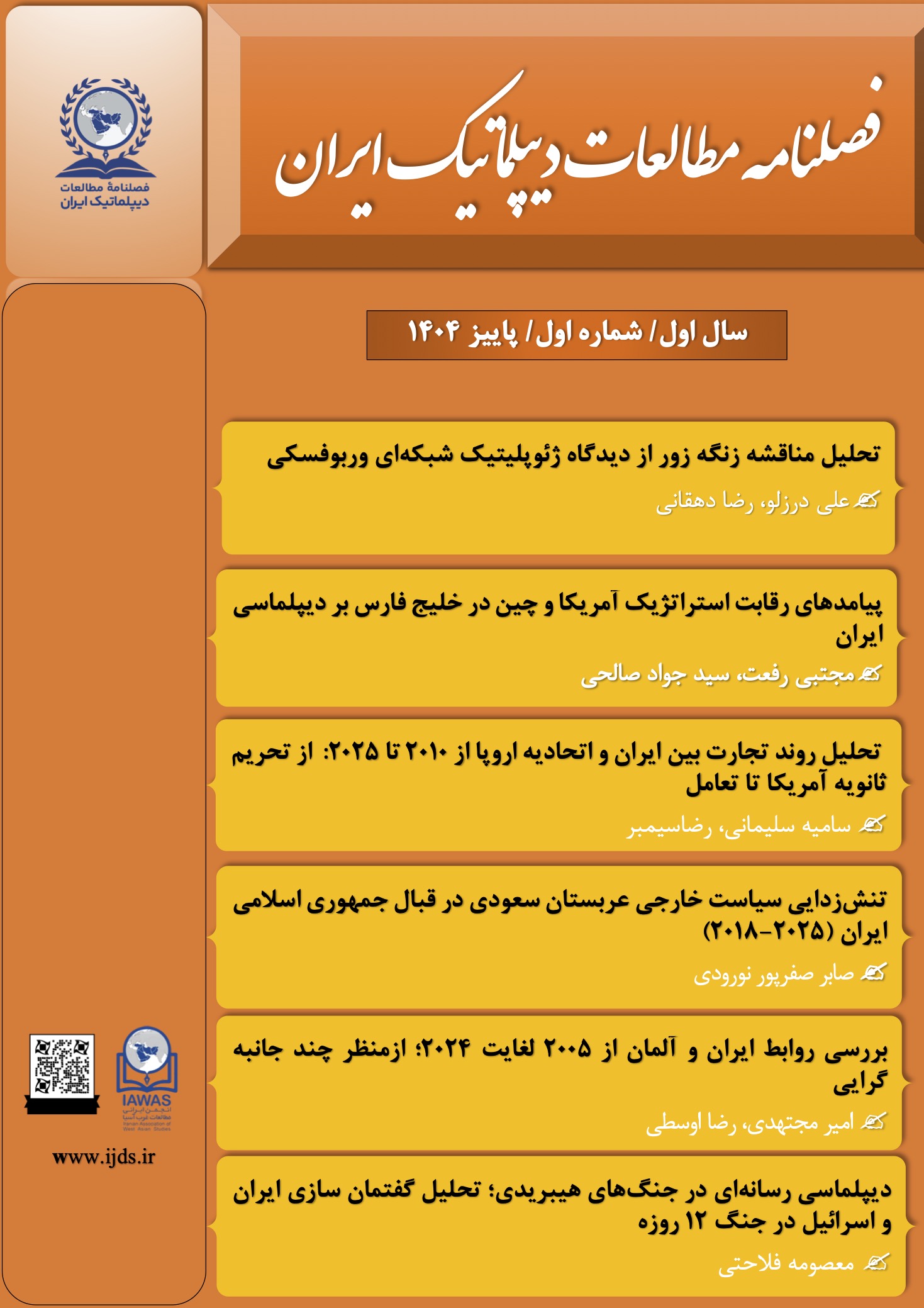
فصلنامه مطالعات دیپلماتیک ایران

فصلنامه مطالعات دیپلماتیک ایران

تنش زدایی سیاست خارجی عربستان سعودی در قبال جمهوری اسلامی ایران (2025-2022)

نوع مقاله : مقاله پژوهشی

نویسنده
دانشجوی دکتری روابط بین الملل، دانشکده ادبیات و علوم انسانی، دانشگاه گیلان، رشت، ایران
چکیده
پس از پیروزی انقلاب اسلامی، روابط جمهوری اسلامی ایران و عربستان سعودی عمدتاً در چارچوب رقابت و تنش تعریف شده است. از سال ۲۰۱۸، نشانه‌هایی از تغییر رویکرد عربستان در قبال ایران و حرکت تدریجی به سمت‌وسوی تنش‌زدایی مشاهده می‌شود. سوال پژوهش؛ چه عواملی موجب تنش‌زدایی سیاست خارجی عربستان در قبال ج.ا.ایران طی سال‌های ۲۰۱۸ تا ۲۰۲5 گردیده است؟ فرضیه حاکیست؛ فشارهای ساختاری نظام بین‌الملل و منطقه، توأم با افزایش عدم قطعیت‌های امنیتی، در تعامل با ادراکات رهبران عربستان سعودی به‌ویژه محمد بن‌سلمان، زمینه‌ساز تعدیل رفتار تقابلی و حرکت به سوی تنش‌زدایی با ایران شده است. یافته‌ها نشان می‌دهد که فرسایشی شدن جنگ یمن، تداوم هزینه‌های رقابت منطقه‌ای، گسترش نقش میانجیگرانه چین در خاورمیانه و نوسان در تعهدات امنیتی آمریکا از حیث تغییر رویکرد دولت‌های دموکرات و جمهوری‌خواه، منجر به تغییر در محاسبات امنیتی عربستان و بازتعریف منافع گردیده است. مقاله حاضر به روش توصیفی_تحلیلی، در چارچوب واقع‌گرایی نوکلاسیک و مبتنی بر اطلاعات اسنادی_ کتابخانه‌ای تهیه شده است.
کلیدواژه‌ها

موضوعات


عنوان مقاله English

De-escalating Saudi Arabia's foreign policy towards the Islamic Republic of Iran (2022-2023)

نویسنده English

Saber Safarpour
PhD student in International Relations, Faculty of Literature and Humanities, University of Guilan, Rasht, Iran
چکیده English

Since 2018, there have been signs of a change in Saudi Arabia's approach towards Iran and a gradual movement towards de-escalation. research question; What factors have caused the de-escalation of Saudi Arabia's foreign policy towards Iran during the years 2018 to 2025? The hypothesis suggests; The structural pressures of the international system and the region, along with the increase in security uncertainties, in interaction with the perceptions of the leaders of Saudi Arabia, especially Mohammed bin Salman, have become the basis for adjusting confrontational behavior and moving towards de-escalation with Iran. The findings show that the erosion of the war in Yemen, the continuation of the costs of regional competition, the expansion of China's mediating role in the Middle East, and the fluctuation in the security commitments of the United States in terms of changing the approach of the democratic and republican governments, have led to a change in Saudi security calculations and a redefinition of interests. The present article was prepared in a descriptive-analytical way, in the framework of neoclassical realism and based on documentary-library information.

کلیدواژه‌ها English

Keywords: Foreign policy
de-escalation
Saudi Arabia
Islamic Republic of Iran
classical neo-realism